
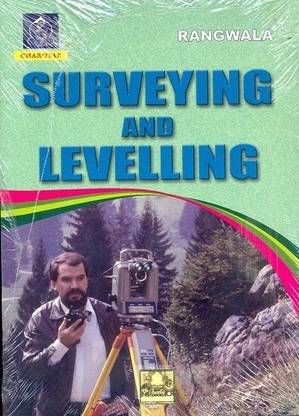
Surveying and Levelling (English, Paperback, Rangwala)
- Language: English
- Binding: Paperback
- Publisher: Charotar Publishing House
- Genre: Technology & Engineering
- ISBN: 9789380358277, 9789380358277
- Pages: 608
This text-book provides an up-to-date knowledge of the basic principles of Surveying and Levelling. The subject matter is canvassed alongwith therory, variety of examples, various types of survey techniques; survey instruments used in the field; measurement of distances, both vertical and horizontal; the direction of lines or agnles between the lines, where as various levelling instruments, principles, techniques, methods applied in levelling are given in this text book. The subject matter is expressed in a simple language and practical manner. The treatment is clear, methodical as well as interesting and easy to follow.
The entire subject matter is systematically arranged in the chapters like: Introduction, Scales, Linear Measurements of Distances , Chain Surveying and Ranging, Cross Staff Chain Surveying and Instruments, Compass Survey, Levelling, Contouring, Plane Table Survey, Computation of Areas, Computation of Volumes, Minor Instruments, Theodolite, Permanent Adjustments of Levels, Tacheometric Surveying, Circular Curves, Transition Curves, Vertical Curves, Field Astronomy, Theory of Errors, Setting Out Works, Hydrographic Surveying, Photographic Surveying, Modern Techniques of Surveying.
Appendix I contains Multiple Choice Questions and Appendix II showing abbreviated terms used in this book are added at the end of the book. All the articles have been given the numbers to enhance the readability and convenience of the reader.
The book now contains :
- 367 self-explanatory and neatly drawn sketches
- 218 solved problems
- 22 useful tables
- 480 questions at the end of the chapters.
The book should prove to be extremely useful to the Engineering students preparing for the Degree Examinations of all the Indian Universities, Diploma Examinationsconducted by various Boards of Technical Education, Certificate Courses as well as for the A.M.I.E., U.P.S.C., G.A.T.E., I.E.S. and other similar competitive and professional examinations. It is also useful for the preparation of NATA (National Aptitude Test for Architecture), CEPT (Centre for Environmental Planning and Technology), SBST (School of Building Science and Technology), SID (School of Interior Design), AIEEE (Architecture), etc. It should also prove of interest to the practising professionals.
Table of Contents
Chapter 1 : Introduction
Chapter 2 : Scales
Chapter 3 : Linear Measurements Of Distances
Chapter 4 : Chain Surveying And Ranging
Chapter 5 : Cross Staff Chain Surveying And Instruments
Chapter 6 : Compass Survey
Chapter 7 : Levelling
Chapter 8 : Contouring
Chapter 9 : Plane Table Survey
Chapter 10 : Computation Of Areas
Chapter 11 : Computation Of Volumes
Chapter 12 : Minor Instruments
Chapter 13 : Theodolite
Chapter 14 : Permanent Adjustments Of Levels
Chapter 15 : Tacheometric Surveying
Chapter 16 : Circular Curves
Chapter 17 : Transition Curves
Chapter 18 : Vertical Curves
Chapter 19 : Field Astronomy
Chapter 20 : Theory Of Errors
Chapter 21 : Setting Out Works
Chapter 22 : Hydrographic Surveying
Chapter 23 : Photographic Surveying
Chapter 24 : Modern Techniques Of Surveying
Appendix I: Multiple Choice Questions
Appendix Ii : Abraviated Terms
Index
| Imprint |
|
- 5★
- 4★
- 3★
- 2★
- 1★
- 5
- 3
- 3
- 0
- 0