

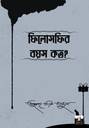
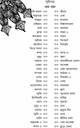
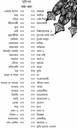

Everything In The World Is Worthy Of Thought And Reflection. || Phylosophyr Bayos Kato? || Written By Best Selling Bengali Author Abdullah Al Mamun (Kaikor) || Trending (Hardcover, Bengali, Abdullah Al Mamun (Kaikor))
Price: Not Available
Currently Unavailable
Highlights
- Author: Abdullah Al Mamun (Kaikor)
- 128 Pages
- Language: Bengali
- Publisher: Biva Publication
Description
The title of the book "How Old Is Philosophy?" raises a question in the minds of readers as soon as they know the name. Why this name!
To put it more clearly, philosophy has no specific age. As much as we think, feel, and think, that's how old philosophy is.
The subjects that philosophy deals with are so fundamental and profound that they cannot be solved by statistics or physical experiments. Therefore, it is necessary to use the tool or vehicle of logic. Knowledge can be gained from clear and accurate ideas about events and information, but philosophers do not rely solely on factual knowledge. The main goal of philosophy is wisdom.
Philosophy develops through the search and practice of wisdom. Pythagoras practiced wisdom all his life and never felt the glory of knowledge. For this reason, he is wise as a philosopher. The wisdom that is desirable for philosophy includes insight, the infallibility of perspective, and the balance of judgment.
It is clear from this that everything is a part of philosophy. That's why I have enclosed my thoughts, consciousness, thoughts, likes, dislikes, and opinions in a cover through small writings. My words are my age of philosophy!
In the first paragraph, the author explains that the title of the book is meant to be thought-provoking. It is a question that invites readers to consider the nature of philosophy and its relationship to human existence.
In the second paragraph, the author argues that philosophy is not limited to a particular time or place. It is a universal human endeavor that has been going on for centuries.
In the third paragraph, the author explains that philosophy is not simply a matter of gathering information. It is also about using reason to make sense of the world around us.
In the fourth paragraph, the author states that the goal of philosophy is wisdom. Wisdom is the ability to see the world clearly and make sound judgments.
In the fifth paragraph, the author concludes by saying that everything is a part of philosophy. This is because everything in the world is worthy of thought and reflection.
The author's use of the word "age" is interesting. It suggests that philosophy is something that grows and develops over time. It is not a static body of knowledge, but rather a living tradition that continues to evolve.
Read More
Specifications
| Book |
|
| Author |
|
| Binding |
|
| Publishing Date |
|
| Publisher |
|
| Edition |
|
| Number of Pages |
|
| Language |
|
| Genre |
|
| Book Subcategory |
|
Be the first to ask about this product
Safe and Secure Payments.Easy returns.100% Authentic products.



Back to top