

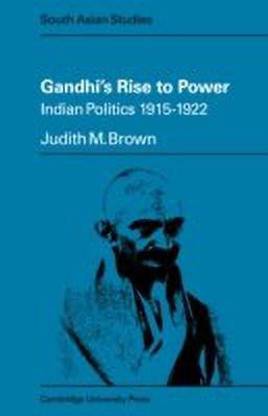
Gandhi's Rise to Power (English, Paperback, Brown Judith M.)
Price: Not Available
Currently Unavailable
Highlights
- Language: English
- Binding: Paperback
- Publisher: Cambridge University Press
- Genre: History
- ISBN: 9780521098731, 9780521098731
- Pages: 404
Description
Dr Brown presents a political study of the first clearly defined period in Mahatma Gandhi's Indian career, from 1915 to 1922. The period began with Gandhi's return from South Africa as a stranger to Indian politics, witnessed his dramatic assertion of leadership in the Indian National Congress of 1920 and ended with his imprisonment by the British after the collapse of his all-India civil disobedience movement against the raj. Focusing on Gandhi, this book nevertheless investigates the changing nature of Indian politics. It aims to study precisely what Gandhi did, on whom he relied for support, how he interacted with other nationalist leaders and how he saw his own role in Indian public life. Unlike the usual interpretation of Gandhi's rise to power as based on a charismatic appeal to the Indian masses, this study argues that his influence depended on a capacity to generate a network of lesser leaders, or subcontractors, who would organise their constituencies for him, whether these were caste, communal or economic groups or whole areas.
Read More
Specifications
Book Details
| Imprint |
|
Dimensions
| Width |
|
| Height |
|
| Length |
|
| Weight |
|
Be the first to ask about this product
Safe and Secure Payments.Easy returns.100% Authentic products.


Back to top