

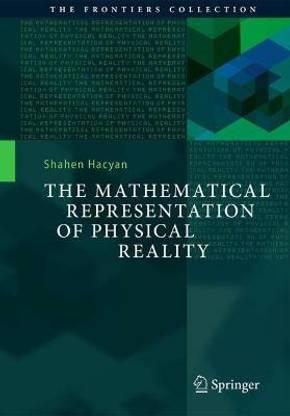
The Mathematical Representation of Physical Reality (English, Hardcover, Hacyan Shahen)
Price: Not Available
Currently Unavailable
Highlights
- Language: English
- Binding: Hardcover
- Publisher: Springer International Publishing AG
- Genre: Science
- ISBN: 9783031212536
- Pages: 155
Description
?This book deals with the rise of mathematics in physical sciences, beginning with Galileo and Newton and extending to the present day. The book is divided into two parts. The first part gives a brief history of how mathematics was introduced into physics-despite its "unreasonable effectiveness" as famously pointed out by a distinguished physicist-and the criticisms it received from earlier thinkers. The second part takes a more philosophical approach and is intended to shed some light on that mysterious effectiveness. For this purpose, the author reviews the debate between classical philosophers on the existence of innate ideas that allow us to understand the world and also the philosophically based arguments for and against the use of mathematics in physical sciences. In this context, Schopenhauer's conceptions of causality and matter are very pertinent, and their validity is revisited in light of modern physics. The final question addressed is whether the effectiveness of mathematics can be explained by its "existence" in an independent platonic realm, as Goedel believed. The book aims at readers interested in the history and philosophy of physics. It is accessible to those with only a very basic (not professional) knowledge of physics.
Read More
Specifications
Book Details
| Title |
|
| Imprint |
|
| Product Form |
|
| Publisher |
|
| Genre |
|
| ISBN13 |
|
| Book Category |
|
| BISAC Subject Heading |
|
| Book Subcategory |
|
| Language |
|
Dimensions
| Height |
|
| Length |
|
| Weight |
|
Be the first to ask about this product
Safe and Secure Payments.Easy returns.100% Authentic products.




Back to top