

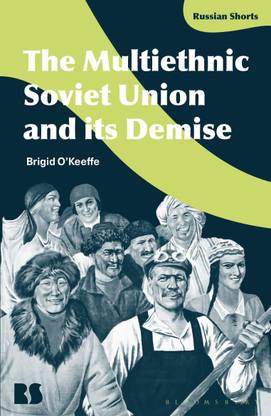
The Multiethnic Soviet Union and its Demise (English, Paperback, O'Keeffe Brigid Associate Professor)
Price: Not Available
Currently Unavailable
Highlights
- Language: English
- Binding: Paperback
- Publisher: Bloomsbury Publishing PLC
- Genre: History
- ISBN: 9781350136779, 1350136778
- Pages: 152
Description
This book is the first to offer a concise, accessible overview of the evolution of the Soviet Union as a multiethnic empire. It reflects on how the Soviet Union was home to many ethnic minorities, and how their fates, and that of the USSR itself, were bound to the question of how the Soviet state responded variously throughout its existence to the fundamental question of ethnic difference across its vast and diverse territory. The book then examines how the Soviet collapse in 1991 fractured the Union along markedly national lines, leading to a variety of new nation-states - including the Russian Federation - being born. Brigid O'Keeffe explains how and why the Bolsheviks inscribed ethnic difference into the bedrock of the Soviet Union and explores how minority peoples experienced the potential advantages and disadvantages of ethnic politics within the Soviet Union. Ukrainians and Georgians, Jews and Roma, Chechens and Poles, Kazakhs and Uzbeks - these and many other minority groups all distinctively shaped and were shaped by the Soviet and post-Soviet politics of ethnic difference. The Multiethnic Soviet Union and its Demise gives you the historical context necessary to understand contemporary Russia's relationships and conflicts with its 'post-Soviet' neighbors and the wider world beyond.
Read More
Specifications
Dimensions
| Width |
|
| Height |
|
| Length |
|
| Weight |
|
Book Details
| Imprint |
|
Contributors
| Author Info |
|
Be the first to ask about this product
Safe and Secure Payments.Easy returns.100% Authentic products.




Back to top