


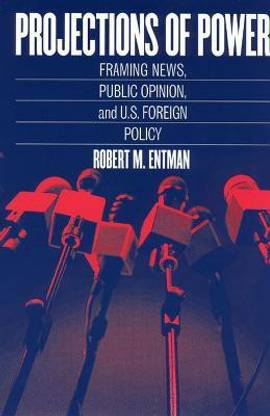
Projections of Power (English, Paperback, Entman Robert M)
Price: Not Available
Currently Unavailable
Highlights
- Language: English
- Binding: Paperback
- Publisher: The University of Chicago Press
- Genre: Political Science
- ISBN: 9780226210728, 9780226210728
- Pages: 240
Description
To succeed in foreign policy, U.S. presidents have to sell their versions or framings of political events to the news media and to the public. But since the end of the Cold War, journalists have increasingly resisted presidential views, even offering their own spin on events. What, then, determines whether the media will accept or reject the White House perspective? And what consequences does this new media environment have for policymaking and public opinion? To answer these questions, Robert M. Entman develops a powerful new model of how media framing works-a model that allows him to explain why the media cheered American victories over small-time dictators in Grenada and Panama but barely noticed the success of far more difficult missions in Haiti and Kosovo. Discussing the practical implications of his model, Entman also suggests ways to more effectively encourage the exchange of ideas between the government and the media and between the media and the public. His book will be an essential guide for political scientists, students of the media, and anyone interested in the increasingly influential role of the media in foreign policy.
Read More
Specifications
Dimensions
| Width |
|
| Height |
|
| Length |
|
| Depth |
|
| Weight |
|
Series & Set Details
| Series Name |
|
Book Details
| Imprint |
|
Contributors
| Author Info |
|
Be the first to ask about this product
Safe and Secure Payments.Easy returns.100% Authentic products.




Back to top