

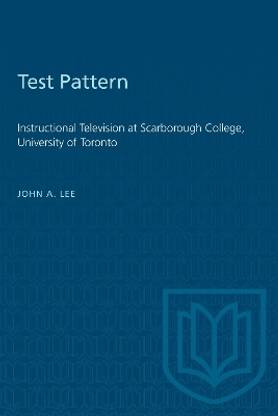
Test Pattern (English, Electronic book text, Lee John)
Price: Not Available
Currently Unavailable
Highlights
- Language: English
- Binding: Electronic book text
- Publisher: University of Toronto Press
- Genre: Education
- ISBN: 9781487576165
- Edition: 1971
- Pages: 144
Description
Scarborough was the first North American university college planned from its inception for television. Closed-circuit TV was fully integrated into its physical fabric and academic program. Videotaped lectures, backed up by small group discussions, were to replace many live lectures. The plan was calculated not only to bring the best lectures abailable to all students, but to save the taxpayers about one million dollars a year. The savings have not resulted; new questions of academic rights and copyright have been raised; and the value of television as a replacement medium is left in doubt. John Lee has written a comprehensive and easily read report of the experiement, its results, and its effects on the internal life of the college. His approach is sociological. While not ignoring the obvious effect of individual personalities involved in the experiment, he contends that the main events were products of the social conditions and forces of time -- among them a rapidly rising student enrolment and technological advances in instructional television. His report is a valuable sociological study of the medium, as well as a detailed examination of the role of television in higher education. It will be of great interest to teachers, administrators, and others concerned with improving university education.
Read More
Specifications
| Title |
|
| Imprint |
|
| Publication Year |
|
| Product Form |
|
| Publisher |
|
| Genre |
|
| ISBN13 |
|
| Book Category |
|
| BISAC Subject Heading |
|
| Book Subcategory |
|
| Language |
|
Be the first to ask about this product
Safe and Secure Payments.Easy returns.100% Authentic products.




Back to top