

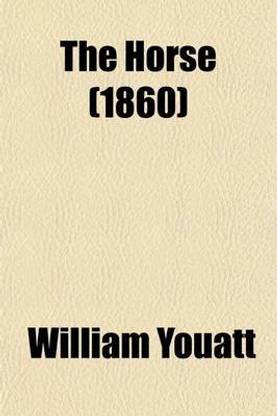
The Horse (1860) (English, Paperback, William Youatt)
Price: Not Available
Currently Unavailable
Highlights
- Language: English
- Binding: Paperback
- Publisher: Cambridge Scholars Publishing
- ISBN: 9780217350532, 0217350534
- Edition: 2009
- Pages: 182
Description
Purchase of this book includes free trial access to www.million-books.com where you can read more than a million books for free. This is an OCR edition with typos. Excerpt from book: looking on man, who has relieved him from the fearful poncho, as his friend. We have seen this lesson so skilfully administered, that the breaker has removed the weighted stirrups, and mounted on the bare back of the horse, which behaved with perfect docility. More generally, however, the lessonâalways the sameâhas to be repeated, till the horse becomes perfectly docile, having learned to rely on man. And if afterwards kindly treated, there are no more docile horses to be found than these recently wild horses of the prairie. TIIE TUBKISH HOESE. The only remaining Oriental horse worthy of notice is the Turkish horse. These are principally descended from those of Arabia, Persia, and Barbary. Their bodies are long, and their cruppers elevated; their foreheads are slender, and they carry their heads higher than the Arabian. They possess much fire and spirit, are extremely active, and are admirably fitted for the operations of Turkish cavalry. They are very affectionate, evincing great regard for their masters and the attendant grooms. The Turks never strike their horses, and the animals, as a matter of course, never bite nor turn restive, their gentleness and obedience being perfect. The Turks take a pride in their horses, even beyond the Arab: and much as we have all read of the Turkish ferocity, these people are, par excellence, the most kind-hearted of the human race. They caress their horses with almost as much affection as their offspring, and their children are taught to treat them with equal gentleness. They especially delight to teach their horses all kinds of entertaining and useful tricks, amongst which they will pick up a stick or scimitar from the ground, and lift it to the rider. When a horse has learned this feat, his nose is adorned with a silver ring, as a ...
Read More
Specifications
Book Details
| Publication Year |
|
Contributors
| Author |
|
Dimensions
| Width |
|
| Height |
|
| Weight |
|
Be the first to ask about this product
Safe and Secure Payments.Easy returns.100% Authentic products.

Back to top