

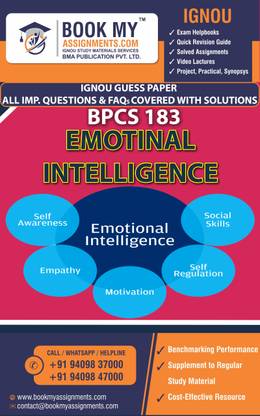
IGNOU BPCS 183 Emotional Intelligence | Guess Paper | Important Question Answer | Bachelor of Arts (Gender Studies) (BAGS) - Best IGNOU exam preparation book (Paperback, BMA Publication)
Share
IGNOU BPCS 183 Emotional Intelligence | Guess Paper | Important Question Answer | Bachelor of Arts (Gender Studies) (BAGS) - Best IGNOU exam preparation book (Paperback, BMA Publication)
Be the first to Review this product
Special price
₹213
₹399
46% off
Available offers

T&C
T&C
T&C
T&C
Delivery
Check
Enter pincode
Delivery by18 Dec, Thursday
?
View Details
Highlights
- Binding: Paperback
- Publisher: BMA PUBLICATION
- ISBN: 9780229659838
- Edition: LATEST, 2025
- Pages: 80
Services
- Cash on Delivery available?
Seller

Description
Introduction to Emotional Intelligence (EI): Understanding the concept of emotional intelligence, including its definition, components, and significance in personal and professional life.
Emotional Awareness: Developing self-awareness of one's own emotions, including identifying and understanding one's feelings, thoughts, and reactions in different situations.
Emotional Regulation: Learning strategies for regulating and managing emotions effectively, including coping with stress, anxiety, anger, and other negative emotions, and promoting emotional balance and well-being.
Empathy and Social Skills: Developing empathy towards others and understanding their emotions and perspectives, and learning social skills such as active listening, communication, teamwork, and conflict resolution.
Self-Motivation: Cultivating intrinsic motivation, resilience, and optimism in pursuing personal and professional goals, and overcoming obstacles and setbacks with a positive attitude.
Interpersonal Relationships: Building and maintaining healthy interpersonal relationships, including trust, respect, and cooperation, and navigating social dynamics and conflicts with emotional intelligence.
Communication Skills: Enhancing communication skills through effective expression and interpretation of emotions, and using nonverbal cues, empathy, and active listening to communicate more authentically and empathetically.
Emotional Intelligence in Leadership: Understanding the role of emotional intelligence in leadership and management, including fostering a positive work culture, motivating and inspiring others, and leading with empathy and emotional intelligence.
Read More
Specifications
Book Details
| Publication Year |
|
| Edition Type |
|
| Book Type |
|
| Exam |
|
| Table of Contents |
|
| Number of Pages |
|
| Net Quantity |
|
Contributors
| Author Info |
|
University Books Details
| Stream |
|
| Degree/Diploma |
|
| Specialization |
|
Additional Features
| Age Group |
|
Dimensions
| Width |
|
| Height |
|
| Depth |
|
| Weight |
|
Be the first to ask about this product
Safe and Secure Payments.Easy returns.100% Authentic products.



Back to top