

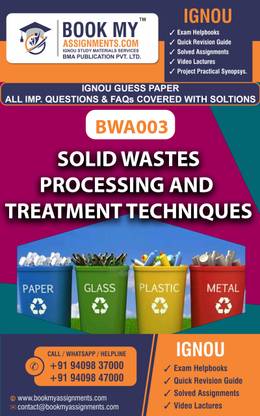
IGNOU BWA 003 Solid Wastes Processing and Treatment Techniques | Guess Paper | Important Question Answer |Certificate in Solid Wastes Treatment Techniques (CSWATT) University (Paperback, BMA Publication)
Share
IGNOU BWA 003 Solid Wastes Processing and Treatment Techniques | Guess Paper | Important Question Answer |Certificate in Solid Wastes Treatment Techniques (CSWATT) University (Paperback, BMA Publication)
Be the first to Review this product
Special price
₹212
₹399
46% off
Available offers

T&C
T&C
T&C
T&C
Delivery
Check
Enter pincode
Delivery by9 Jan, Friday
?
View Details
Highlights
- Binding: Paperback
- Publisher: BMA Publication
- ISBN: 9781815830815
- Edition: Latest, 2024
- Pages: 80
Services
- Cash on Delivery available?
Seller

Description
Introduction to Solid Waste Processing and Treatment: Providing an overview of the importance of processing and treating solid waste, including the goals of reducing waste volume, mitigating environmental pollution, and recovering valuable resources.
Waste Sorting and Segregation: Discussing the importance of waste sorting and segregation at the source or at waste management facilities to separate recyclable materials, organic waste, hazardous waste, and non-recyclable waste streams.
Composting: Exploring composting techniques for organic waste treatment, including aerobic and anaerobic composting methods, and discussing the benefits of composting for soil enrichment, carbon sequestration, and waste diversion.
Anaerobic Digestion: Examining anaerobic digestion as a biological treatment process for organic waste, including the production of biogas (methane) for energy generation and digestate for soil amendment, and discussing its applications in waste management.
Waste-to-Energy (WTE) Incineration: Discussing WTE incineration as a thermal treatment process for non-recyclable waste, including the combustion of waste to generate heat or electricity, and examining its environmental impacts, energy recovery efficiency, and regulatory considerations.
Pyrolysis and Gasification: Exploring pyrolysis and gasification technologies for converting solid waste into syngas, biochar, and other value-added products, and discussing their potential for waste-to-energy conversion and resource recovery.
Mechanical-Biological Treatment (MBT): Examining MBT as an integrated waste treatment approach combining mechanical separation and biological treatment processes to recover recyclable materials and stabilize organic waste fractions.
Recycling and Material Recovery: Addressing recycling and material recovery techniques for recovering valuable resources from solid waste streams, including mechanical recycling, chemical recycling, and innovative recycling technologies.
Read More
Specifications
Book Details
| Publication Year |
|
| Exam |
|
| Number of Pages |
|
| Net Quantity |
|
University Books Details
| Stream |
|
| Degree/Diploma |
|
| Specialization |
|
Additional Features
| Age Group |
|
Be the first to ask about this product
Safe and Secure Payments.Easy returns.100% Authentic products.

Back to top