

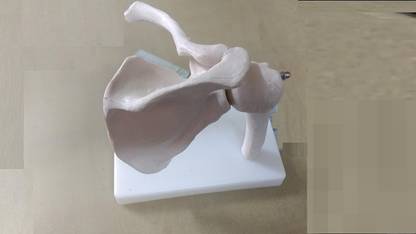
Labgo Joint Anatomical Model Skeleton Life Size Shoulder (White)
Share
Labgo Joint Anatomical Model Skeleton Life Size Shoulder (White)
Be the first to Review this product
₹1,980
₹3,999
50% off
Coupons for you

T&C
Available offers

T&C
T&C
T&C
T&C
Delivery
Check
Enter pincode
Delivery by27 Dec, Saturday
?
if ordered before 8:59 PM
View Details
Highlights
- Fiber Glass Material
- No batteries Battery
- Non Rechargeable
Services
- Cash on Delivery available?
Seller

Description
Helps students understand the morphology and construction of the shoulder joint. Demonstrates all of the shoulder functions and the external anatomical structures. Includes flexible ligaments. Made of washable, high quality pvc and it is in it's natural size and on a stand. Demonstrates all major movements of the shoulder joint.
Read More
Specifications
General
| Brand |
|
| Model Name |
|
| Sales Package |
|
| Skillset |
|
| Number Of Batteries |
|
| Minimum Age |
|
| Material |
|
| Battery Operated |
|
| Battery Type |
|
| Rechargeable |
|
| Other Features |
|
| Type |
|
| Color |
|
| Sound |
|
| Maximum Age |
|
| Lights |
|
| Character |
|
| Net Quantity |
|
Additional Features
| Key Features |
|
Dimensions
| Weight |
|
Frequently Bought Together
₹1,881
₹3,999
52% off


Please add at least 1 add-on item to proceed
Be the first to ask about this product
Safe and Secure Payments.Easy returns.100% Authentic products.



Back to top