

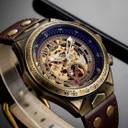
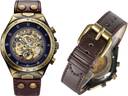

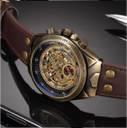
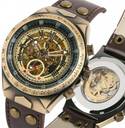

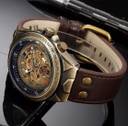
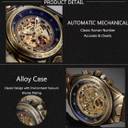

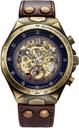
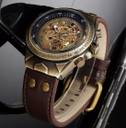
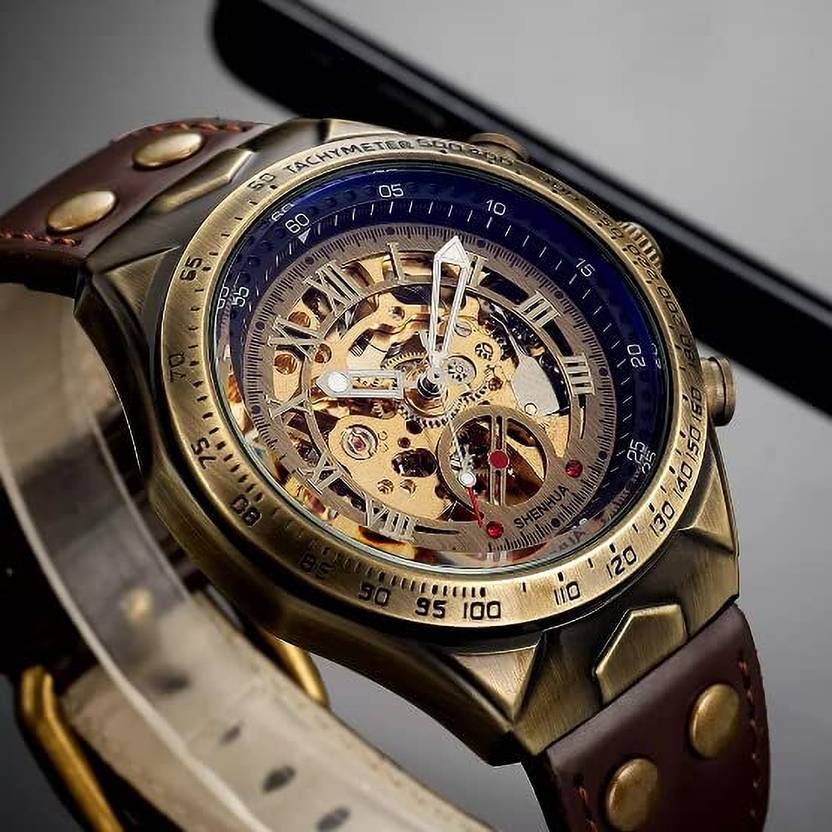
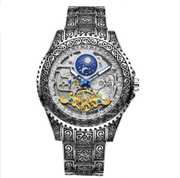
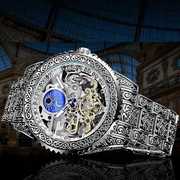
Olmeca Treasured Object d'art Artistic Value Classic Skeleton Evocative In Period Style Fully Automatic Mechanical Analog Watch - For Men
Share
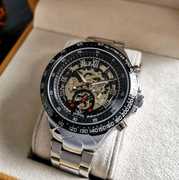
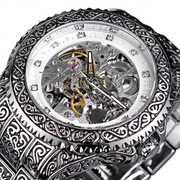
Olmeca Classic Skeleton Evocative In Period Style Fully Automatic Mechanical Analog Watch - For Men Vintage Ticking Time Piece Iconic Amplified Automatic Mechanical Self Winding
Special price
₹9,999
3.7
254 ratings and 14 reviewsStrap Color
 68BRW
68BRW G13G
G13G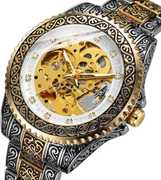 Sil
Sil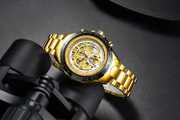 UNI-/10-SVN-GL
 UNI-/10-SVN-GRY
 UNI-/13/SL/WHT
- +3 more
Please select a Strap Color to proceed
Dial Color
- G13G
- Sil
- UNI-/10-SVN-GL
- UNI-/10-SVN-GRY
- UNI-/13/SL/WHT
 UNI-/20/SL
 WOMEN-20SLV
 WOMEN-BLK-107-BLK
- brown
Please select a Dial Color to proceed
Coupons for you

T&C
Available offers

T&C
T&C
T&C

Warranty
The mechanical watch is covered by a limited warranty for a period of 6 Months from the date of purchase. Please retain your proof of purchase for warranty claims. Covered Components and Conditions: This warranty covers manufacturing defects in the watch movement, case, and crystal. Regular servicing of your watch by authorized service centers is recommended to maintain warranty coverage. Please refer to your owner's manual for servicing intervals. Exclusions: The warranty does not cover damage resulting from misuse, accidents, unauthorized repairs, tampering, or modifications. Normal wear and tear, including scratches on the case, crystal, and strap, are not covered under this warranty. Authorized Service Centers: All warranty-related repairs or servicing must be performed by authorized service centers or watchmakers. Contact our customer support for a list of authorized service centers. Proof of Purchase: To make a warranty claim, you must provide a valid proof of purchase, such as the original receipt
 Deliver to
Check
Delivery by26 Dec, Friday
?
if ordered before 7:59 AM
View Details
Services
- The mechanical watch is covered by a limited warranty for a period of 6 Months from the date of purchase. Please retain your proof of purchase for warranty claims. Covered Components and Conditions: This warranty covers manufacturing defects in the watch movement, case, and crystal. Regular servicing of your watch by authorized service centers is recommended to maintain warranty coverage. Please refer to your owner's manual for servicing intervals. Exclusions: The warranty does not cover damage resulting from misuse, accidents, unauthorized repairs, tampering, or modifications. Normal wear and tear, including scratches on the case, crystal, and strap, are not covered under this warranty. Authorized Service Centers: All warranty-related repairs or servicing must be performed by authorized service centers or watchmakers. Contact our customer support for a list of authorized service centers. Proof of Purchase: To make a warranty claim, you must provide a valid proof of purchase, such as the original receipt
- Cash on Delivery available?
Seller
Product Details

Brand
Olmeca
Display Type
Analog
Ideal For
Men
Mechanism
The mechanism at the heart of a mechanical watch is a marvel of precision engineering. It consists of several key components that work together to measure time accurately. Here's an overview of the main elements of a mechanical watch mechanism, :The mainspring is housed in a barrel, which regulates the release of energy from the mainspring to prevent the watch from running too fast or too slow. The barrel contains a gear, known as the barrel arbor, that turns as the mainspring unwinds., The mainspring is the power source of a mechanical watch. It is a coiled wire of special metal (usually alloyed steel) that stores energy when wound. As the mainspring unwinds, it releases energy to power the watch., The gear train is a series of gears and wheels that transmit the energy from the mainspring to various parts of the watch, including the escapement and the hands. The gear train also regulates the speed at which the watch operates., Escapement: The escapement is a crucial component that divides the energy from the gear .
Style Code
Vintage Ticking Time Piece Iconic Amplified Automatic Mechanical Self Winding
Series
Classic Skeleton Evocative In Period Style Fully Automatic Mechanical
Occasion
Casual, Party-Wedding, Formal, Sports
Movement
Mechanical Automatic
Pack of
1
Sales Package
1 Mechanical Glass Through Watch, 1 Premium Watch Box, 1 Owner's Manual, 1 Warranty Card, 1 Hang Tag or Label, 1 Outer Packaging, 1 Watch Pillow or Cushion, 1 Certificate of Authenticity
Shock Resistance
Yes
Model Name
Treasured Object d'art Artistic Value
Strap Color
Brown
Net Quantity
1
Trend
Bright Color, Water resistant, Work - Leather Straps, Bejewelled
Watch Features
Luminous, Scratch Resistant, Water Resistant
Width
45 mm
Thickness
15 mm
Diameter
22 mm
Weight
122 g
Domestic Warranty
6 Months
Warranty Period
6 Months
Warranty Service Type
This component covers issues related to the movement of the watch. It usually includes repairing or replacing any defective or malfunctioning parts of the mechanical movement, such as gears, springs, escapement, or balance wheel. This warranty often lasts for a specific duration, 6 Months, depending on the watch brand and model.
Covered in Warranty
Automatic watches often have water resistance ratings. The warranty should specify the depth to which the watch is water-resistant and provide coverage in case of water damage due to a manufacturing defect. This warranty may be separate from the movement warranty.,The warranty may stipulate that any repairs or servicing must be conducted by authorized service centers or watchmakers to maintain coverage. Unauthorized repairs can void the warranty.
Not Covered in Warranty
Exclusions: The warranty may also list exclusions, which are situations or conditions not covered by the warranty. Common exclusions include damage due to misuse, accidents, unauthorized repairs, or normal wear and tear. Servicing and Maintenance: The warranty may specify the need for regular servicing and maintenance to keep the warranty valid. It's essential to follow these guidelines to ensure warranty coverage.
Warranty Summary
The mechanical watch is covered by a limited warranty for a period of 6 Months from the date of purchase. Please retain your proof of purchase for warranty claims. Covered Components and Conditions: This warranty covers manufacturing defects in the watch movement, case, and crystal. Regular servicing of your watch by authorized service centers is recommended to maintain warranty coverage. Please refer to your owner's manual for servicing intervals. Exclusions: The warranty does not cover damage resulting from misuse, accidents, unauthorized repairs, tampering, or modifications. Normal wear and tear, including scratches on the case, crystal, and strap, are not covered under this warranty. Authorized Service Centers: All warranty-related repairs or servicing must be performed by authorized service centers or watchmakers. Contact our customer support for a list of authorized service centers. Proof of Purchase: To make a warranty claim, you must provide a valid proof of purchase, such as the original receipt
Dial Color
Bronze
Dial Shape
Round
Strap Color
68BRW
World Time
No
Dual Time
No
Strap Type
Leather straps are classic and elegant. They can be made from various types of leather, including calf, alligator, crocodile, or ostrich. Leather straps are comfortable, flexible, and suitable for both formal and casual occasions.
Strap Material for Refiner
Genuine Leather
Strap Design
Classic Smooth Leather Strap: A timeless choice, the classic smooth leather strap features a sleek, polished surface. It's versatile and can complement both dress and casual watches.
Case/Bezel Material
Sapphire Crystal: Sapphire is highly regarded for its scratch resistance and durability. It is the most common material used for premium and luxury mechanical watches. Sapphire crystals provide excellent clarity and maintain their appearance over time.
Water Resistance Depth
30
Power Reserve Indicator
No
Light
Luminous Material Types: There are several types of luminous materials used in mechanical watches: Super-LumiNova: This is a widely used, non-radioactive luminous material. Super-LumiNova is available in various colors, with green and blue being the most common. It has excellent brightness and longevity. Trinite: Trinite is a brand of luminous material known for its long-lasting glow. It is often used in high-quality watches. Tritium: Tritium used to be a common luminous material in watches, but it is radioactive and has been largely replaced by safer alternatives like Super-LumiNova. LumiBrite: LumiBrite is a proprietary luminous material used by Seiko. It offers a strong and long-lasting glow. Charging and Glow Duration: Luminous material charges when exposed to natural or artificial light. The amount of time it takes to charge and the duration of the glow in the dark can vary based on the type and quality of the material used.
Clasp Type
Tang Buckle: The tang buckle is the most common and traditional type of clasp for leather watch straps. It consists of a metal pin and tang (tongue) that fit through holes in the strap. The tang secures the strap in place when inserted into the desired hole.
Moonphase
Moon Disk: A moon phase complication typically consists of a small moon disk with two identical moons, one in gold or a bright color (representing the full moon) and the other in dark blue or black (representing the new moon). Rotation: The moon disk is connected to a gear train that slowly rotates it over the course of approximately 29.5 days, which is the length of a lunar month. Window: A small aperture or window on the watch dial reveals a portion of the moon disk. As the moon disk rotates, the visible portion of the moon changes, displaying various phases, including the new moon, first quarter, full moon, and last quarter.
A mechanical watch is a timekeeping device that operates without the use of batteries or electronic components. Instead, it relies on a complex system of gears, springs, and other mechanical components to measure and display time. Here's a brief description of how a mechanical watch works:
Main Components:
Main Spring: The watch is powered by a tightly wound mainspring, which stores energy.
Gears and Wheels: The energy from the mainspring is transferred through a series of gears and wheels.
Escapement Mechanism:
The escapement is a crucial component that releases the stored energy at a controlled rate.
It includes a pallet fork and an escape wheel, allowing the gears to move in small, controlled increments.
Balance Wheel:
The balance wheel swings back and forth, dividing time into equal parts.
It regulates the release of energy from the mainspring.
Jewel Bearings:
Mechanical watches often use jewel bearings (usually synthetic rubies) to reduce friction and wear in the movement.
Dial and Hands:
The watch has a dial with hour, minute, and sometimes second markers.
Hands mounted on the central shaft indicate the time.
Manual vs. Automatic:
In a manual (hand-wound) mechanical watch, the wearer must periodically turn the crown to wind the mainspring.
In an automatic (self-winding) mechanical watch, a rotor converts the motion of the wearer's wrist into energy to wind the mainspring.
Power Reserve:
Mechanical watches have a power reserve, indicating how long they can operate before needing to be wound again.
Craftsmanship:
Mechanical watches are often valued for their craftsmanship, intricate movements, and the skill required to assemble and regulate them.
Accuracy:
While modern mechanical watches are quite accurate, they may require periodic adjustment or regulation.
Heritage and Style:
Many people appreciate mechanical watches for their traditional craftsmanship and the artistry involved in their design.
Mechanical watches are admired not only for their timekeeping functionality but also for the artistry and craftsmanship that goes into creating these intricate timepieces.
Manufacturing, Packaging and Import Info
Ratings & Reviews
3.7
254 ratings and 14 reviewsImages uploaded by customers:
5
Quality is better overall look an feel awsmm
READ MORECertified Buyer, Maghar
5
Khub sundor darun thankuuuuuu
READ MORECertified Buyer, Bansberia
All 14 reviews
Questions and Answers

Q:If we have wind or shake the watch once than how much time it will work without winding or shaking it again.
A:u have to shake it for sometime and then this will work for 5 to 6 hrs also depends on the hand movement how much u are doing . Internal Gears working . Automatic Mechanical Watch. No battery needed.
SubUrbia
Flipkart Seller3
1

Report Abuse
Q:What brand is this watch
A:Olmeca .
Inside gears are working.Automatic mechanical watch. . it does not need any battery . u need to shake the watch before every use.u don't need to wind it.Lifetime Watch
SubUrbia
Flipkart Seller4
1
Report Abuse
Q:How much time means duration should be shaked the water to start it first time for a New one watch?
A:some seconds u need to shake it before every use and set the time. The inside gears are working. Automatic mechanical watch lifetime watch . it does not need any battery .
SubUrbia
Flipkart Seller1
0
Report Abuse



Back to top