

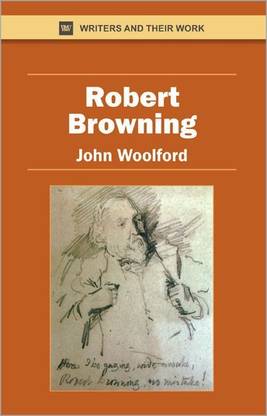
Robert Browning (English, Paperback, Woolford John)
Share
Robert Browning (English, Paperback, Woolford John)
4.7
3 Ratings & 0 Reviews₹185
Available offers

T&C
T&C
T&C
T&C
Delivery
Check
Enter pincode
Delivery by13 Feb, Friday
?
View Details
Highlights
- Language: English
- Binding: Paperback
- Publisher: Atlantic Publishers & Distributors Pvt Ltd
- Genre: Biography & Autobiography
- ISBN: 9788126913091, 9788126913091
- Edition: 2000
- Pages: 128
Services
- Cash on Delivery available?
Seller
Description
Browning is now widely regarded as the nineteenth century's great poet of human psychology, but commentators in his own time defined him rather as a poet of 'the grotesque'. In this study John Woolford undertakes to translate this term by positioning Browning in a major aesthetic tradition running from the Romantic sublime through to modern theorizations of the grotesque such as Bakhtin's. This perspective offers new insights into Browning's most famous and significant generic contribution, the dramatic monologue, as well as explaining features of his poetic language such as his ludic experiments and his notorious linguistic difficulty. Woolford argues persuasively that the difficulty is something that can now be celebrated, rather than deplored or excused. Browning was perhaps the cleverest English poet, but he was also more than that: contemporaries' comparisons of his human curiosity and penetration to that of Chaucer, or Shakespeare, were not misplaced. All were masters of what Chesterton called 'the serious grotesque'.
Read More
Specifications
Book Details
| Imprint |
|
| Publication Year |
|
Contributors
| Author Info |
|
Frequently Bought Together

Please add at least 1 add-on item to proceed
Ratings & Reviews
4.7
★
3 Ratings &
0 Reviews
- 5★
- 4★
- 3★
- 2★
- 1★
- 2
- 1
- 0
- 0
- 0
Have you used this product? Be the first to review!
Be the first to ask about this product
Safe and Secure Payments.Easy returns.100% Authentic products.


Back to top