

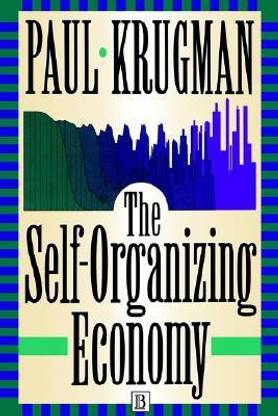
The Self Organizing Economy (English, Hardcover, Krugman Paul)
Share
The Self Organizing Economy (English, Hardcover, Krugman Paul)
Be the first to Review this product
₹9,154
₹13,715
33% off
Available offers

T&C
T&C
T&C
T&C
Delivery
Check
Enter pincode
Delivery by6 Feb, Friday
?
View Details
Highlights
- Language: English
- Binding: Hardcover
- Publisher: John Wiley and Sons Ltd
- Genre: Business & Economics
- ISBN: 9781557866981, 1557866988
- Edition: 1996
- Pages: 132
Seller

Description
The Self-Organizing Economy In the last few years the concept of self-organizing systems-complex systems in which randomness and chaos seem spontaneously to evolve into unexpected order-has linked together researchers in many fields, from artificial intelligence to chemistry, from evolution to geology. Now leading economist Paul Krugman shows how principles that explain the growth of hurricanes and embryos can also explain the formation of cities and business cycles; how the same principles of "order from random growth" can explain the strangely simple rules that describe the sizes of earthquakes, meteorites, and metropolitan areas. Weaving together strands from many disciplines, from location theory to biology, The Self-Organizing Economy offers a surprising new view of how the economy structures itself in space and time.
Read More
Specifications
Book Details
| Imprint |
|
| Publication Year |
|
Contributors
| Author Info |
|
Series & Set Details
| Series Name |
|
Dimensions
| Width |
|
| Height |
|
| Length |
|
| Weight |
|
Be the first to ask about this product
Safe and Secure Payments.Easy returns.100% Authentic products.



Back to top